Our Work Driving Efficiency in Rwandan Health Centers
How we automated repetitive administrative tasks so clinicians could focus on patient care
Introduction
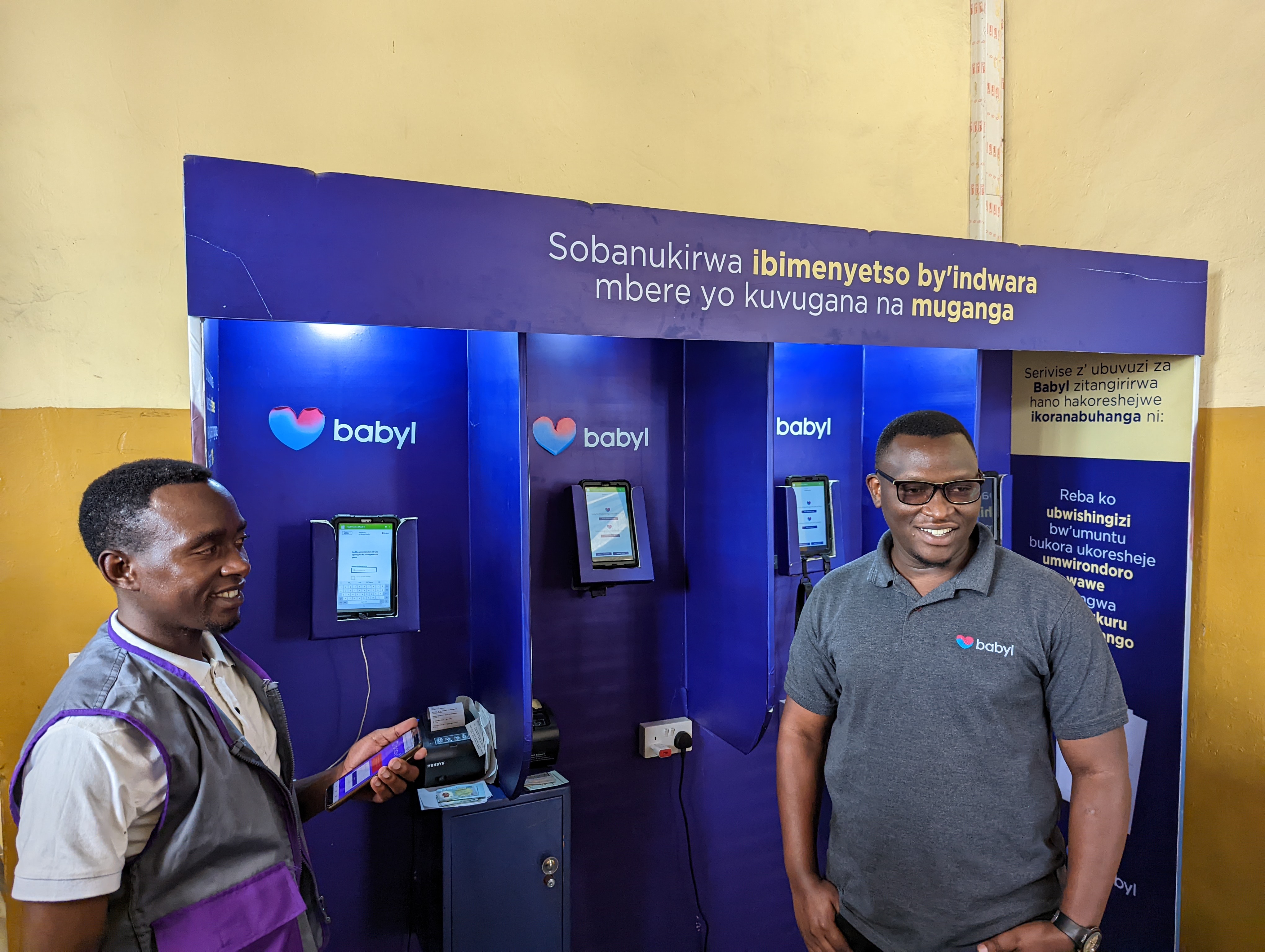
Babyl Rwanda deployed tablet kiosks at health centers to streamline patient intake and reduce the time clinicians spend on basic questions. Before seeing a doctor, patients used the kiosk to verify their identity, confirm insurance coverage, and complete an AI-assisted triage.
By the time patients reached a clinician, their identity was confirmed, insurance was validated, and symptoms were documented. Clinicians received a structured summary, allowing them to focus on diagnosis and treatment rather than administrative tasks.
This approach handled millions of patient interactions and significantly improved health center efficiency.

How It Works
What happens at the tablet kiosk before the clinician consultation
Identity Check
Patient scans national ID to confirm identity
Insurance Verification
Coverage confirmed with insurer before consultation
Symptom Collection
Patient answers questions about symptoms and history
AI Triage
System assesses urgency and likely conditions
Clinician Handoff
Doctor receives verified patient summary
Our Kiosk Solution
Each step of the patient intake, handled before the clinician consultation
Identity Check
Patients scan their national ID at the kiosk to confirm their identity. This creates a verified patient record that links to their medical history and prevents duplicate registrations.
Insurance Verification
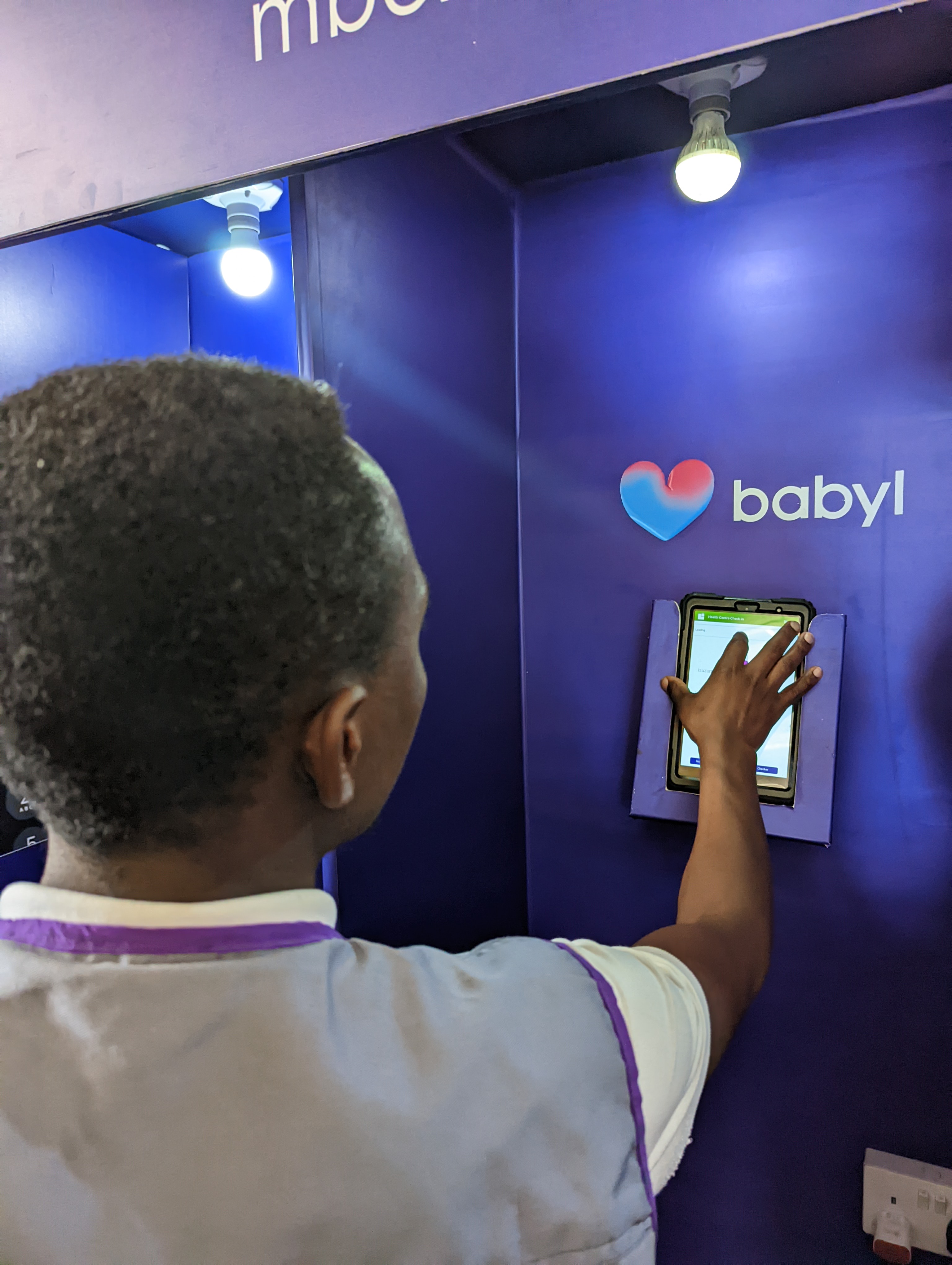
The kiosk checks insurance coverage with the patient's provider. Before seeing a clinician, both patient and staff know exactly what is covered and any co-payment required.
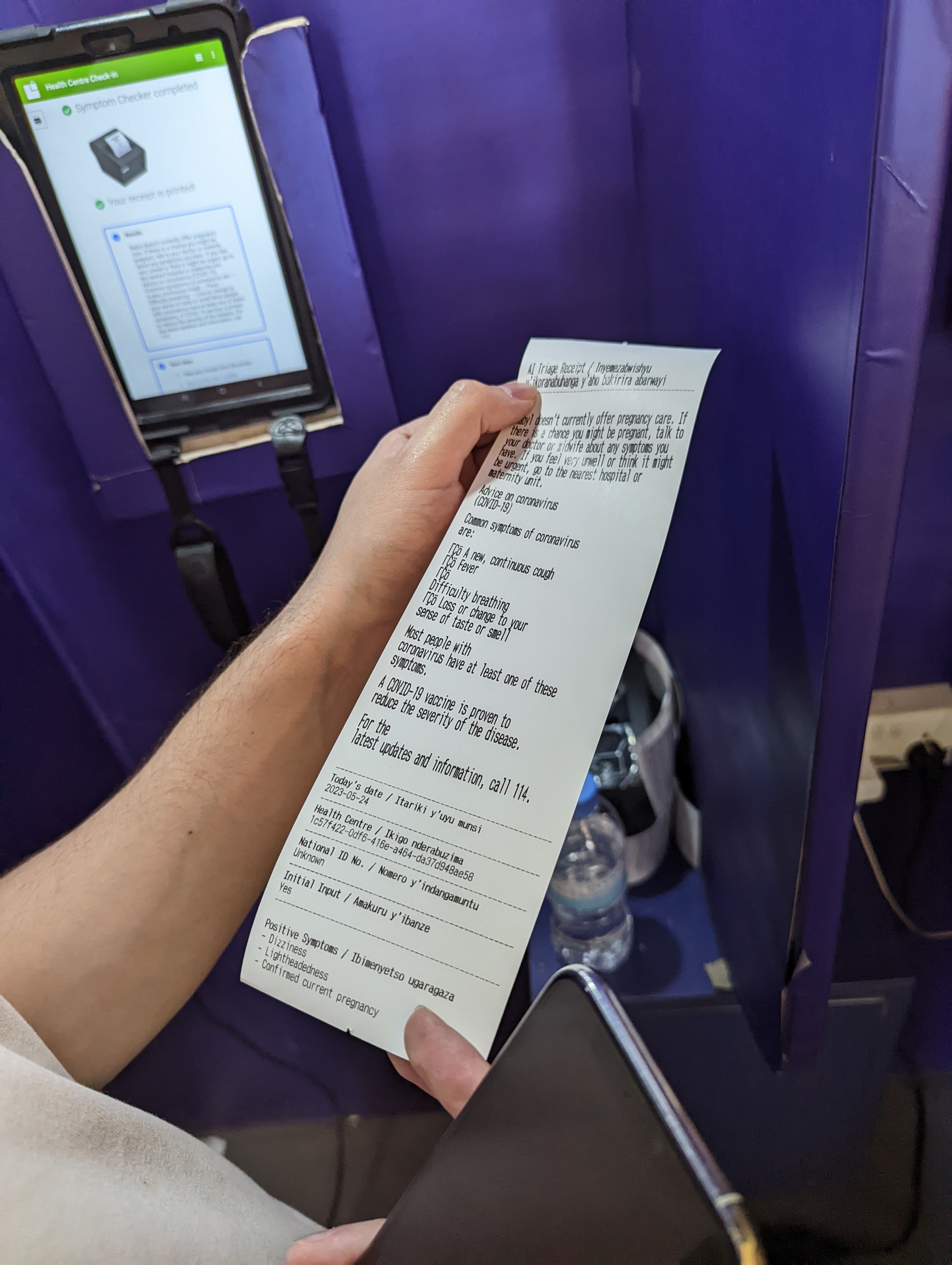
Symptom Collection
The kiosk guides patients through a structured set of questions about their symptoms, medical history, and reason for visit. This captures consistent, detailed information that would otherwise take clinician time to gather.
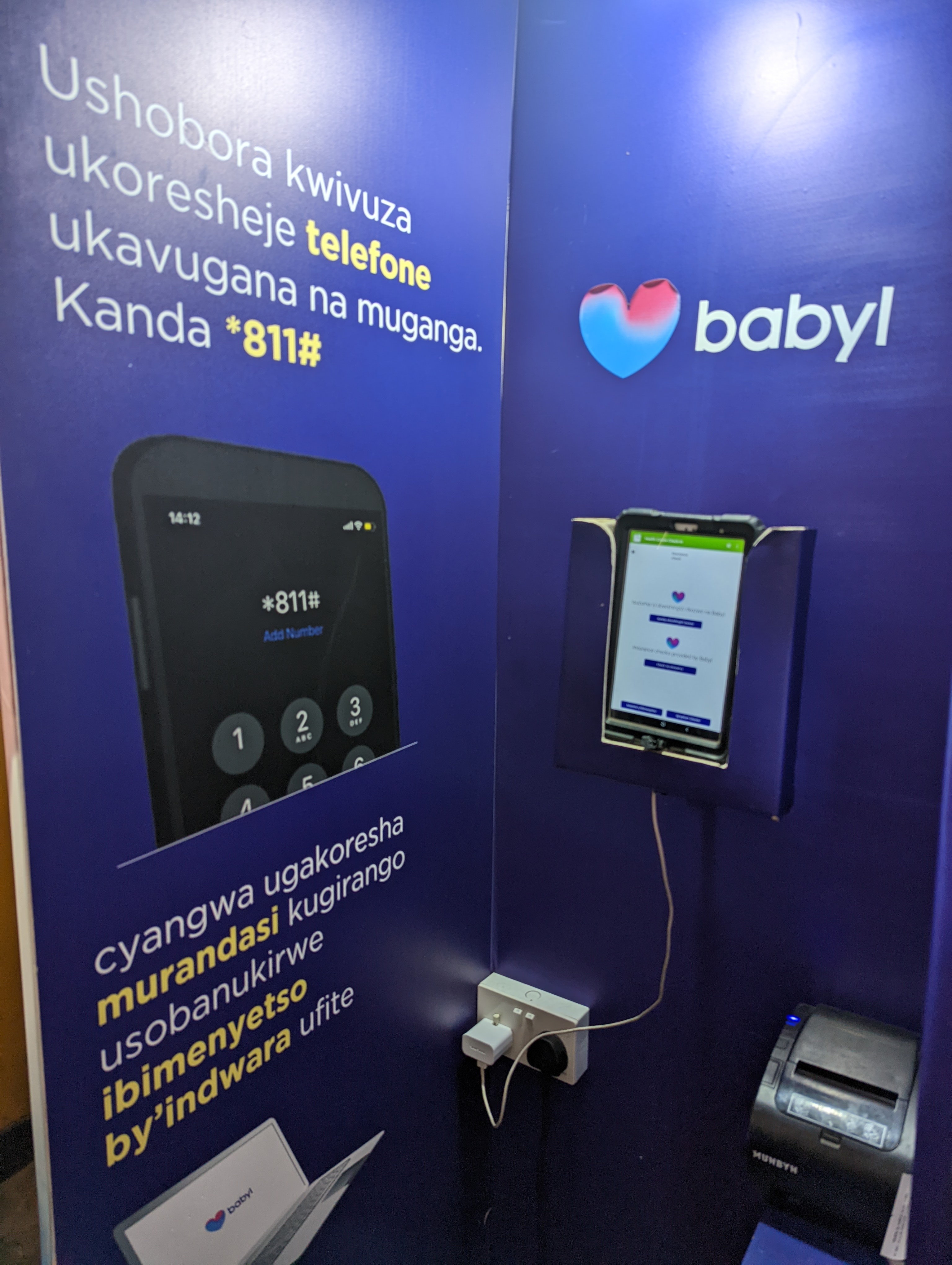
AI Triage
The system analyzes collected symptoms to assess urgency and identify likely conditions. Urgent cases are flagged for priority attention, while the analysis gives clinicians a head start on diagnosis.
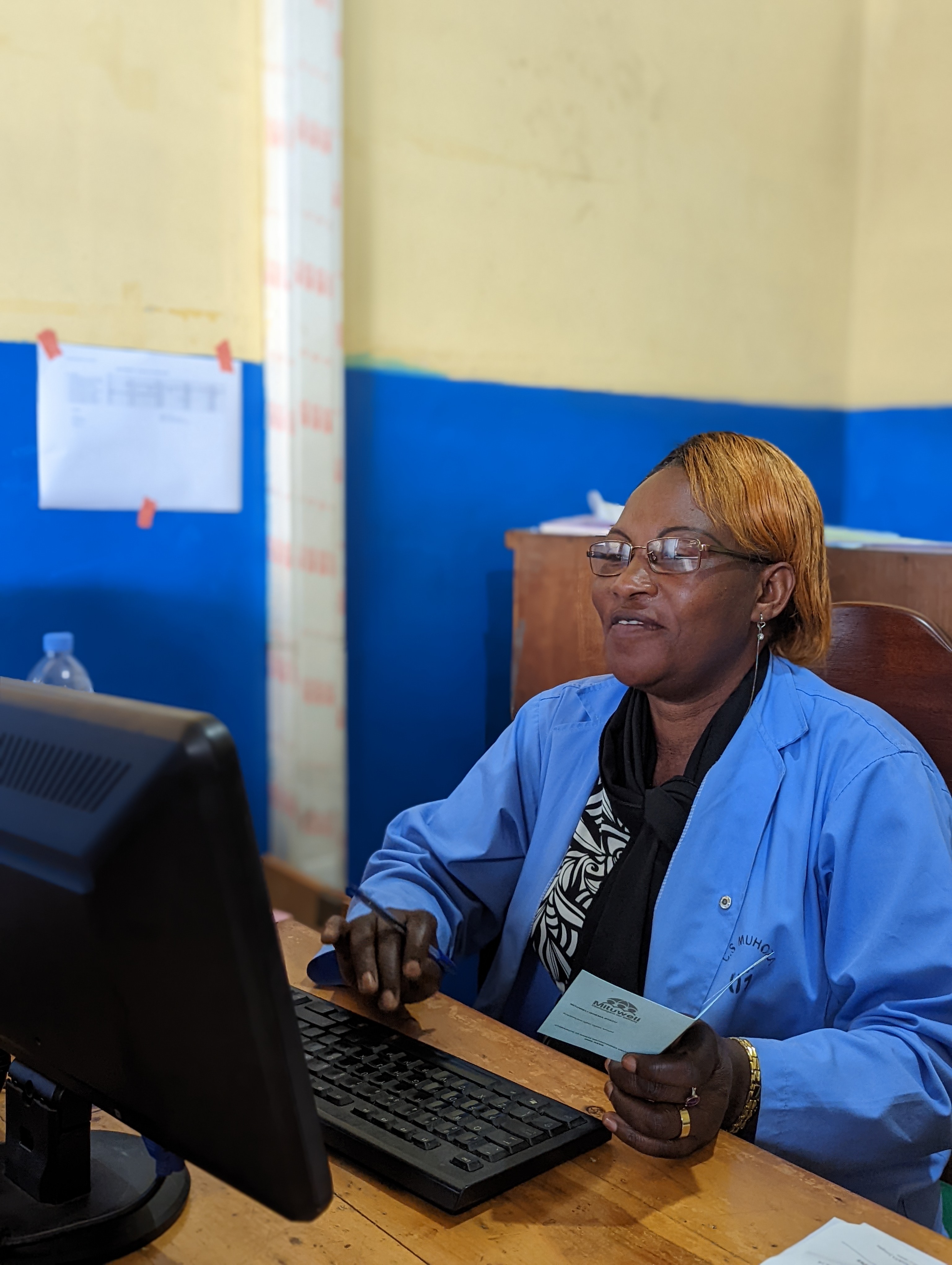
Clinician Handoff
Clinicians receive a structured summary with verified identity, confirmed insurance, documented symptoms, and triage assessment. They can start the consultation with complete information instead of asking basic questions.
Impact
Estimated impact from Babyl Rwanda's deployment across health centers
Patient Interactions
The tablet kiosk solution operated at national scale, handling millions of patient intake sessions.
Saved Per Visit
Clinicians skipped basic intake questions. Identity, insurance, and symptoms were ready before the patient sat down.
More Patients Seen
Shorter consultations meant higher throughput. Health centers served more patients without adding staff.
Insurance Pre-Verified
Coverage was confirmed before the consultation, reducing rejected claims and billing surprises.
Talk to Us
We built this system for Rwanda, but the challenges it solves exist everywhere: clinicians buried in paperwork, unverified patient data, manual insurance processes.
If your health centers face similar issues, we would like to hear about them. We can adapt this solution to your context:
- Integration with your national ID systems and insurance providers
- Triage protocols aligned with your clinical guidelines
- Workflows designed around how your health centers actually operate
Start with a pilot at a few facilities. See the impact. Then decide whether to scale.
Publications
Various reports and articles about Babyl's AI triage system in Rwanda
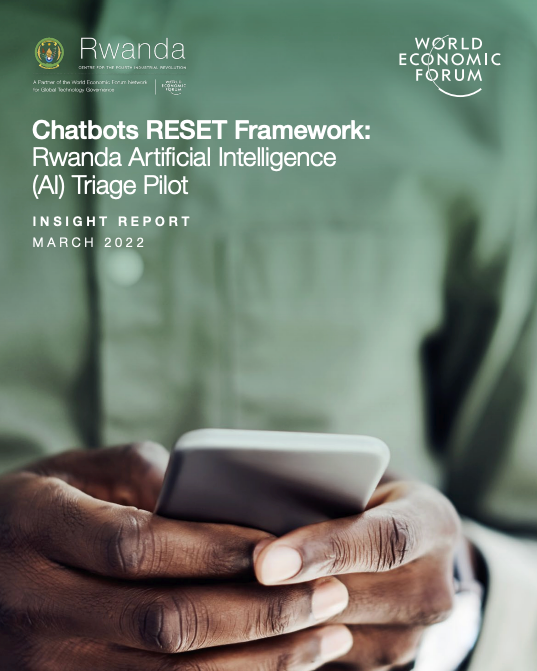
Babyl Rwanda's AI Triage Pilot
An independent World Economic Forum report documents Rwanda's national AI triage pilot with Babyl and confirms reliable integration into government call-centre operations.
Babyl handled over 4,000 medical consultations per day through national call centres, as reported by the World Economic Forum.
The Forum further reports that integrating the AI triage tool enabled nurses to work more efficiently and make quicker decisions, describing this as a critical step in digitising the national healthcare system.

Rwanda launches C4IR AI triage pilot

World Bank Africa Human Capital Plan

AI powered COVID-19 chatbot for triage
Babyl offering AI powered triage tools

Integration of Health & Medical Innovations

Healthcare and Artificial Intelligence
AI Triage & Symptom Checker in Rwanda
Harnessing AI for Healthcare in Rwanda
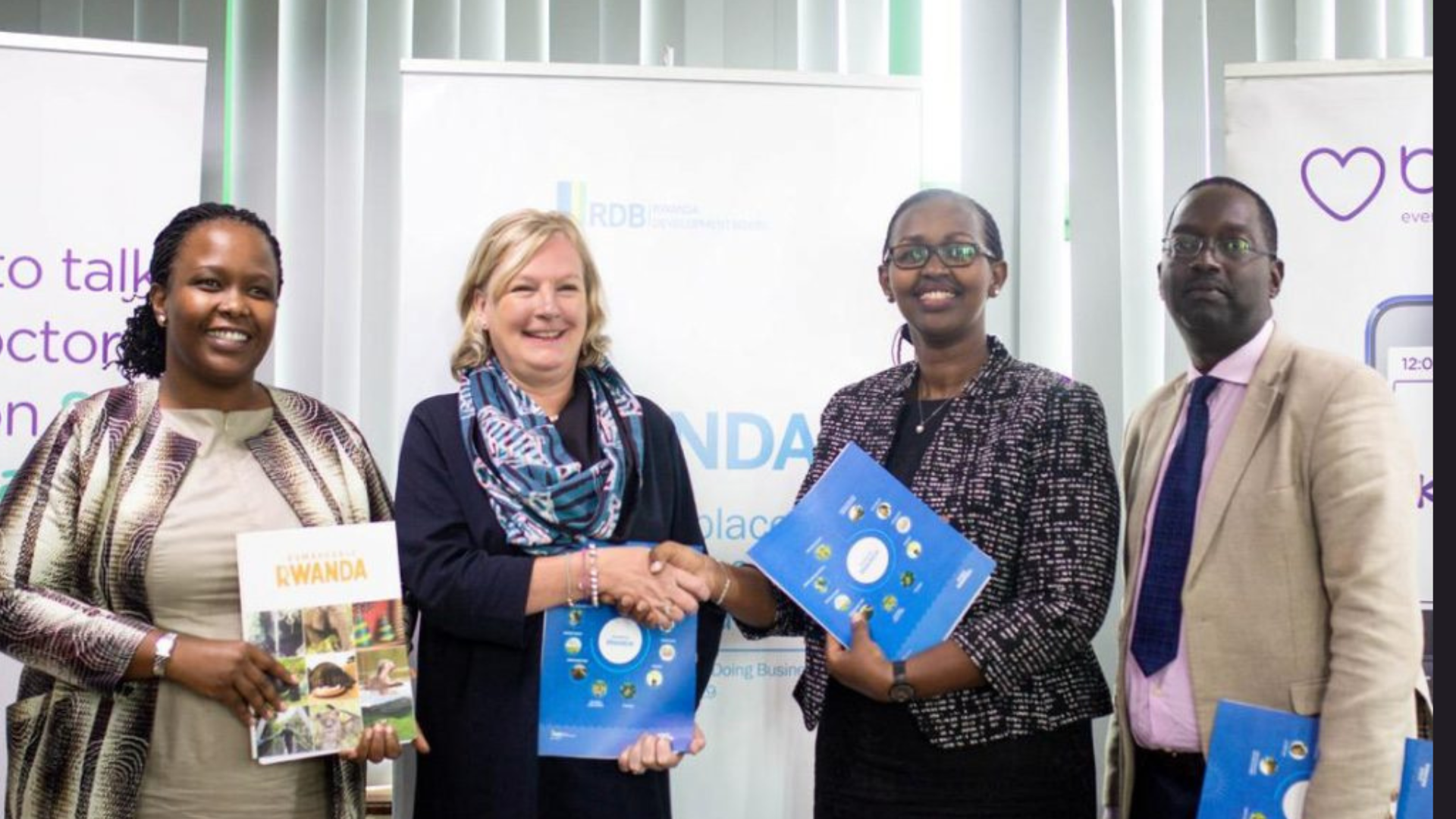
Babyl is strongly anchored in AI
Who You'll Be Working With
Here to Help You With Global Health Projects

Manoj Nathwani
Hi, I'm Manoj, a software engineer based in London with 15 years of experience, specialising in global health. I've led Rwanda's largest digital health service, integrated AI-driven healthcare workflows for The Gates Foundation, and worked with organisations like UNAIDS, The WHO, The Malawi Ministry of Health and NHS England.

Dr. Charlie Nederpelt
Hi there, Charlie, I'm a physician and health economist with 9 years experience working on health services and health systems research, focusing on cost-effectiveness and health benefits packages since 2022. I consulted for WHO, Ministries of Health, global health organisations, national health insurance agencies, and academics.